
Most IT problems aren’t major.
They’re just constant.
It’s usually not one big problem.
It’s the steady stream of small things that keep interrupting the day.
Something's slow.
Something doesn't load right.
Someone can't access what they need.
Nothing fully breaks, but nothing really works the way it should either.
And over time, it adds up.
Nothing urgent. Nothing broken. Just constant.
What this actually looks like during the day
The day starts with a plan. Then IT gets in the way.
- can’t access a system
- file missing or locked
- app lags or crashes
- work gets paused
- deadlines tighten

By mid-morning:
- Work is paused or retried
- Managers are fielding "is this fixed yet?"
- Tickets are in, but no one knows where they stand
By the afternoon:
- Another issue pops up
- Workarounds stack up
- Deadlines get tighter
The day ends with things "working again"
But no one expects that to last.
What we hear all the time
"It's not one big issue, it's just constant stuff."
"We're dealing with the same problems over and over."
"When something goes wrong, it turns into a fire drill."
"I don't really know if our IT is in good shape or not."
Most teams have simply gotten used to it.
What this is really costing you
This isn't just an IT problem.
It shows up in your business.
- Proposals go out late because files weren't accessible
- Follow-ups get missed because systems lag or don't update
- Clients notice delays
- Staff lose 30 to 60 minutes a day in small interruptions
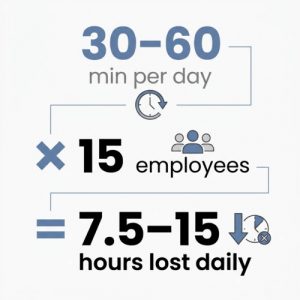
Across a 15-person team, that's one to two full workdays lost every day.
Most of it never shows up on a report.
You're not dealing with inconvenience. You're losing capacity every day.
The difference is control
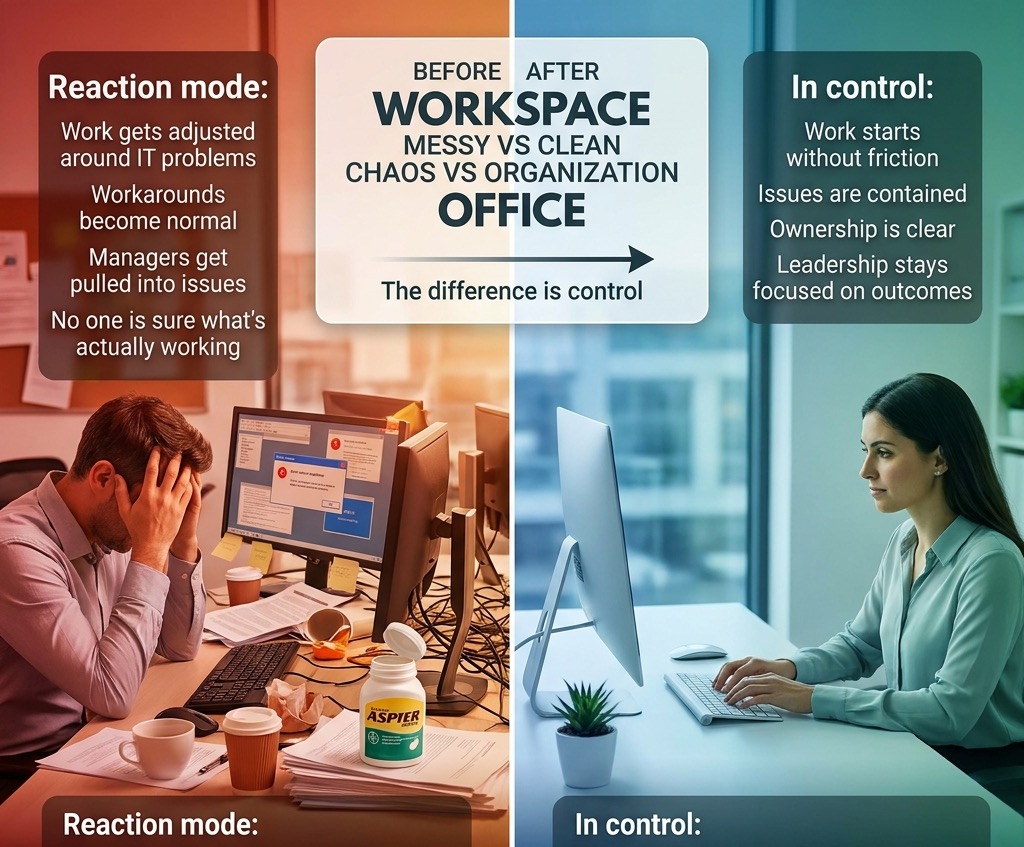
Same business. Same team.
The difference is whether your technology creates friction or removes it.
Most companies are not dealing with random issues. They are dealing with an environment that quietly forces them to react.
At some point, you need to step back and figure out why this keeps happening.
The Technology Confidence Score
A straight answer on where your technology stands, out of 100.
Step 1
The Call
A 15-minute conversation with one of our owners. They’ll walk through the areas that matter most: network security, backups, access controls, response time, and a few others that tend to hide problems. No prep needed, and nothing to send ahead of time.
Step 2
The Score
You’ll get a real number, your Technology Confidence Score out of 100, and a clear picture of where things are solid and where they’re exposed. No pitch attached. Fix it yourself, have your IT team fix it, or have 10D Tech fix it. Your call.
Step 3
What Happens Next
If it makes sense to go further, we'll schedule a Discovery Call to review your environment properly. No pressure either way.
What you walk away with
- A clear picture of what's working and what isn't
- Where you're exposed
- Whether your data is actually protected
- Why issues keep repeating
- What matters to fix first
"This explains why we keep dealing with the same issues."


If someone in your office handles IT by default, this usually lands with them first
What it’s like working with us
If we miss a call from a client during business hours, Monday through Friday, 9 to 5, we donate $50 to our nonprofit of the month. That’s not a promise about just this call. That’s what it’s always like once you’re a client.
Who this is for
We work with businesses and organizations across Oregon and SW Washington, anchored in Corvallis, Albany, Salem, Eugene, Portland, and Bend, plus statewide.
This is a fit if:
- 10 to 250 employees
- Systems matter to daily operations
- You've outgrown reactive IT
- You're dealing with constant friction
Not a fit if:
- You'd take the lowest quote without weighing what's behind it
- You'd rather call someone each time something breaks than stop it from breaking again
- IT isn't impacting your day-to-day
Start with a quick conversation
No pressure. No pitch.
Just a 15-minute call to talk through what's going on and decide if it makes sense to go further.
It's a 15-minute call. If it's not a fit, we'll tell you that.


MSP Titans of the Industry, 2026 Finalist, Community Impact
Community Impact is judged on the difference an MSP makes in the communities it serves, not on where it operates. 10D Tech puts more than $150,000 a year into local nonprofits through direct giving and donated technology support.


Portland Business Journal, Private 100 Fastest-Growing Companies, 2026
Ranked 66th in Oregon and Southwest Washington. Second consecutive year on the list, up from 67th.




Questions people usually have before booking
Is this going to turn into a sales pitch?
No. The first conversation is just that, a conversation. We'll talk through what's been coming up and whether it's even worth taking a closer look. If it's not, we'll tell you.
I'm not looking to switch providers right now. Does this still make sense?
Yes. Most of the teams we talk to already have someone in place. This isn't about switching, it's about understanding what's actually going on and whether anything is being missed.
What if this just tells me what I already know?
Fair question. The Score gives you a number and specifics, not a generic checklist. If something in it doesn’t ring true, say so on the call. That’s what it’s there for.
How much time is this really going to take?
The first step is a 15-minute call. If it makes sense to continue, the Discovery Call runs about an hour. No drawn-out process.
Is this going to create more work for me?
No. We don't expect you to gather a bunch of information ahead of time. We guide the process and ask for what we need along the way.
We've had someone look at our IT before and nothing really changed. What's different here?
Most reviews focus on tools and surface-level issues. We focus on patterns, what keeps coming back, where time is being lost, and what's actually being missed. That's usually where the difference shows up.
What happens if we go through this and don't want to move forward?
That's completely fine. You'll still leave with a clear understanding of where things stand and what needs attention. What you do with that is up to you.